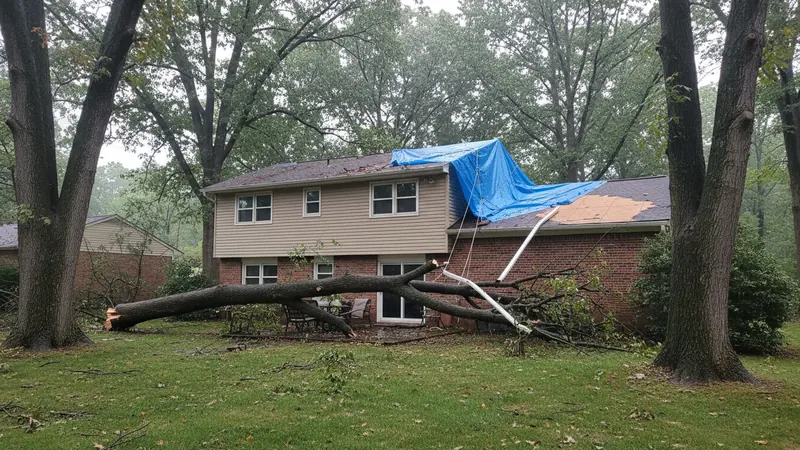
What you need from temporary roof cover, how trees and historic roofing affect the job, and what to settle before signing.
When the roof can safely be covered
Emergency tarping covers storm-damaged roofing while you arrange permanent repairs. It does not rebuild broken framing. Nor does it tell you whether the house is safe to occupy. If a tree has crushed your roof, first find out whether workers can safely reach the damaged area. Check whether they can safely work above it.
OSHA tells employers to check the roof's strength and structural integrity before sending workers onto it. Its guidance also says crews should never install a tarp while storm winds or rain continue. Allow for those limits when you book an emergency visit. A promised arrival time cannot make an unsafe roof safe to work on.
Tell the crew about wires touching your house or fallen branches before they arrive. OSHA says to treat power lines as live. Have the utility confirm that they are de-energised. A neighbourhood outage does not mean a wire is safe. Look only from places you can reach safely. Do not climb onto the roof.
Source: U.S. Department of Labor, OSHA, Roof Tarping (Blue Roof) Safety, published 2017; advisory guidance, no separate effective date stated. Gathered 2026-09-23.
What the tarping work order should describe
Ask for a work order that names the damaged roof section. It should say what roofing is there. It should also describe the temporary cover the crew proposes. OSHA describes tarping as laying plastic sheeting over damaged roofs. It says crews commonly secure tarps with wood strips. Ask how the crew will attach the cover to your roof. Ask what they expect to disturb or remove.
Before you sign, get written answers to these questions:
- Which openings and roof sections will the cover protect?
- Does the price include clearing debris needed to reach those areas?
- Where will the crew fasten the cover? Who will repair those attachment points?
- Who returns if the cover loosens or water still gets in? How will you be charged for that visit?
- Who removes the tarp when permanent roof work begins?
We suggest these questions to help you agree the work. They are not county tarping specifications. Have the crew record any areas it could not reach or cover. You and your permanent roofer need to know what remains exposed. An invoice saying only “emergency service” will not tell you that.
Source: U.S. Department of Labor, OSHA, Roof Inspection, Tarping, and Repair, Hurricane eMatrix activity sheet; undated advisory guidance, no effective date stated. Scope questions are practical recommendations drawn from the work described. Gathered 2026-09-23.
When a fallen tree delays the tarp
In Howard County, clearing a road and clearing your roof are different jobs. The Bureau of Highways says its Tree Division removes fallen limbs from roads. It also removes dead trees from county rights-of-way. The county generally does not remove plant material from private property. Reporting a fallen street tree does not necessarily arrange for someone to lift it off your house.
If a blocked county road prevents access, report it urgently to the Bureau during regular operating hours. Outside those hours, the county directs you to police. Do not send emergency requests through email or SeeClickFix. The county warns that staff may not see them promptly. You can find the contacts on its tree-maintenance page.
Ask who will arrange tree work on your roof. Find out when the tarping crew can safely follow. Make sure your quote distinguishes lifting heavy branches from sweeping away loose roofing debris. Otherwise, you risk a gap between crews. The tree may be gone, but the opening remains. Neither work order may say who will cover it.
Source: Howard County Bureau of Highways, Tree Maintenance, tree-related emergencies and private-property guidance; undated, no effective date stated. Crew-coordination advice is a practical inference from the county's stated service limits. Gathered 2026-09-23.
Protect historic roofing while stopping the rain
For historic-district approvals, see the county page. With tarping, you need to know how workers will attach the cover without needlessly damaging roofing you may need to keep. Ellicott City's design guidelines favour repairing and preserving historic wood, metal, and slate roofs. Lawyers Hill's guidelines likewise favour repairing roofs that still have their original material. They also favour keeping the original roofline.
Settle this before someone nails through sound roofing or strips it away to make room for a tarp. Ask the contractor how they will attach the cover. Ask which material can stay. Photograph the existing roof from somewhere safe. Have the crew record what it removes.
If your property needs historic review, follow the emergency route to preservation staff described on the county page. Send your proposed temporary method. Include photographs. We found no blanket permission to attach any tarp in any manner in the guidance we reviewed. Nor did we find a promise of an emergency decision within a fixed time. Aim to keep sound material while stopping the rain. The method needs to suit your roof.
Source: Howard County Historic District Commission, Ellicott City Historic District Design Guidelines, adopted 1998-05-07, and Lawyers Hill Historic District Design Guidelines, adopted 1995-04-06; no separate effective dates stated. Howard County DPZ, Historic Preservation Commission, emergency guidance undated, no effective date stated. Gathered 2026-09-23.
What you are paying for
We could not verify a Howard County-specific installed tarping price, hourly rate, or emergency surcharge from the primary sources we reviewed. We found no local average to quote. Ask for a price for the work you actually need. It should cover access equipment, debris work, the cover, later visits, and removal. If anything remains unpriced, ask how you will approve that charge.
For Maryland's contract and licensing requirements, see the county page. Make sure your signed work order clearly describes temporary roof protection. Check whether it also commits you to permanent roofing work. A short emergency visit can still leave you with a broader contract than you intended.
Government tarping is a separate question. When we checked, the U.S. Army Corps of Engineers' Operation Blue Roof page reported no active mission. This free disaster programme is activated through FEMA at an affected state's request. It is not a standing Howard County tarping service. Do not budget on that help being available after an ordinary local storm.
Source: Maryland Department of Labor, Maryland Home Improvement Contracts, undated guidance, no effective date stated; U.S. Army Corps of Engineers, Operation Blue Roof, live mission status and program guidance, no effective date stated. No county-specific private-service price verified. Gathered 2026-09-23.
Keep the claim record and the repair moving
Maryland's Insurance Administration names roof tarps as a reasonable way to prevent further storm damage. It says you should not wait for the adjuster before making necessary temporary repairs. It also warns you not to endanger yourself. Photograph or video the damage before, during, and after the work where safe. Keep your receipts.
To get reimbursed, your loss must be covered. The expense must also be reasonable and necessary. The applicable deductible generally still applies. A contractor's promise that insurance will pay does not settle any of that. Keep your itemised tarping invoice separate from estimates for permanent roof repairs. That helps the insurer see what each charge covers.
Before the crew leaves, agree how you will report continued leaks. Settle who checks the cover while you wait for permanent work. We could not verify a Howard County-specific guaranteed response time or tarp lifespan. A dry ceiling straight after the visit does not mean the job is over. You still need a plan for permanent repair.
Source: Maryland Insurance Administration, Storm Related Damage FAQs, temporary-repair guidance; undated, no effective date stated. Follow-up questions are practical recommendations; no local response-time or lifespan figure verified. Gathered 2026-09-23.